





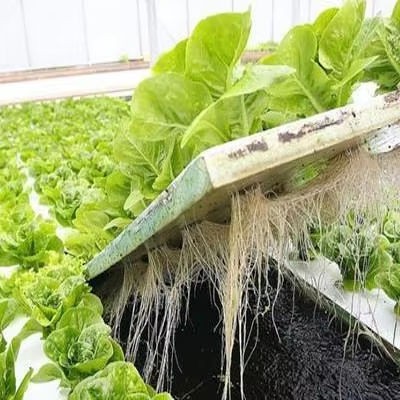
Expanded polypropylene (EPP) foam raft boards are redefining material standards in Deep Water Culture (DWC) hydroponic systems. As demand for sustainable and efficient food production rises, EPP foam provides a durable, lightweight, and environmentally responsible alternative to conventional polystyrene rafts.
In DWC systems, plant roots grow directly in nutrient-enriched water, while the shoots remain supported above the surface by floating boards. These rafts are essential for maintaining plant buoyancy and spacing. Although expanded polystyrene (EPS) has long been used, it often suffers from water absorption, warping, and microplastic pollution. EPP foam solves these challenges with its superior mechanical strength, closed-cell structure, and long-term water resistance.
The closed-cell architecture of EPP ensures high buoyancy and zero water uptake, maintaining stable flotation even under heavy planting loads. Its compressive strength prevents deformation during extended use, reducing the need for frequent replacement. This not only improves system reliability but also lowers maintenance and material waste, aligning with the principles of circular agriculture.
Thermal insulation is another key advantage. EPP’s low thermal conductivity helps stabilize root-zone temperatures, improving nutrient absorption and plant metabolism. The boards can be manufactured with precision holes and surface contours that optimize plant spacing and aeration, promoting healthier root development. Unlike EPS, EPP retains its form under circulation or aeration pressure, preventing stress on young seedlings and mature plants alike.
EPP is also a non-toxic and fully recyclable material. It does not release harmful chemicals into nutrient solutions and maintains structural integrity without fragmenting into microplastics. At the end of its service life, EPP boards can be recycled and remolded, supporting closed-loop sustainability in hydroponic operations.
Design flexibility further strengthens EPP’s role in modern DWC systems. Manufacturers can tailor board dimensions, thickness, and surface textures to meet the needs of various crops, from leafy greens to fruiting vegetables. Modular or integrated designs can also accommodate sensors or irrigation components, paving the way for intelligent hydroponic systems.
In summary, EPP foam raft boards deliver significant improvements in durability, buoyancy, and environmental performance for DWC hydroponics. Their combination of strength, recyclability, and customization potential makes them a next-generation material for sustainable agriculture. As hydroponic technology evolves, EPP-based rafts will likely serve as the foundation for more efficient, automated, and eco-friendly cultivation systems.










 East side of Jiaoping Road, Madian Industrial Park, Jiaozhou City, Qingdao City, Shandong Province
 +86-
+86- market@qd-smr.com
 East side of Jiaoping Road, Madian Industrial Park, Jiaozhou City, Qingdao City, Shandong Province
 +86-15588637956
 market@qd-smr.com