





Buyers often write “foam” on a specification and expect any expanded foam to do the job. In practice the two materials most frequently quoted for packaging and industrial parts — EPP and EPE — behave so differently under heat, repeated load and impact that choosing the wrong one is a common and expensive mistake. A bracket that must survive under-bonnet temperatures will fail in EPE. A single-trip cushion for a light appliance may be over-engineered, and over-priced, in EPP.
This guide compares expanded polypropylene and expanded polyethylene on the properties that actually drive a decision, explains how the material choice also fixes the manufacturing process, and closes with a short checklist you can run before you quote. If you want the material background first, start with what expanded polypropylene is, or see how it stacks up against a third common foam in EPP vs EPS.
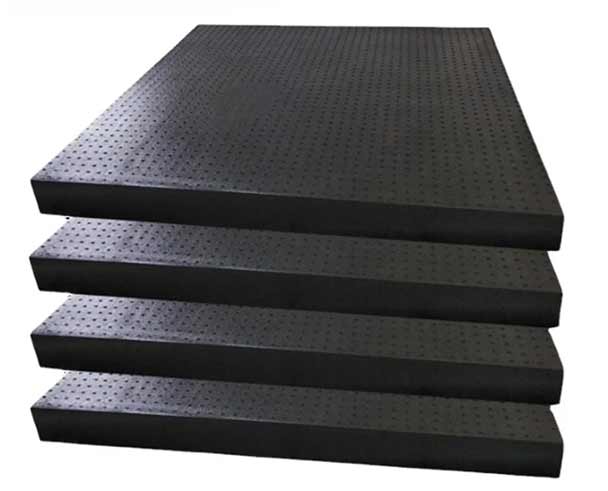
Both are expanded olefin foams — the base resin decides everything
EPP is made from polypropylene; EPE is made from polyethylene. Both are expanded into closed-cell foams with very low density, and both are recyclable olefin plastics. Beyond that, the polymer backbone sets a ceiling on what each foam can do, and the way each is manufactured reinforces the difference.
EPP is normally produced as small beads that are pre-expanded and then fused together in a steam-chest mould. The result is a rigid, integrally-skinned part that holds its shape, resists heat and recovers from repeated compression. EPE is most often extruded into continuous sheet or bun stock and then cut, laminated, welded or thermoformed into shape. That route suits softness and speed, but the foam takes a set more readily and has a lower temperature ceiling. The two are described in more detail under EPP material composition and safety.
Head-to-head: EPP vs EPE properties
| Property | EPP (expanded polypropylene) | EPE (expanded polyethylene) |
|---|---|---|
| Base polymer | Polypropylene (PP) | Polyethylene (PE) |
| Typical density range | ≈ 20–100 kg/m³ and above, set part by part | ≈ 15–40 kg/m³ in sheet and plank form |
| Service temperature | Roughly −30 °C to +100 °C, with higher short-term peaks | Roughly −40 °C to +70 °C, softer well before it degrades |
| Stiffness / load bearing | High — can act as a structural core or carrier | Low to medium — cushions rather than carries |
| Recovery after impact | Excellent; springs back after repeated hits | Good on the first hit, then progressively flatten |
| Compression set under sustained load | Low — holds form in a returnable loop | Higher — creeps and flattens over time |
| Energy absorption profile | Multi-impact, high-energy, structural | Single-impact, low-velocity, surface protective |
| Chemical resistance | Good against many oils, greases and dilute chemicals | Lower, and more sensitive to some solvents |
| Surface and finish | Moulded skin, crisp edges, precise features | Soft, easily cut, laminated and coloured |
| Recycling stream | Recovered with PP streams; supports closed-loop reuse | Recovered with PE film and foam streams |
| Relative cost | Higher material cost plus mould tooling | Lower material cost, no tooling required |
The three differences that decide most projects
Where EPE is the right answer
Expanded polyethylene earns its place whenever the brief is soft, light, cheap and fast, with a single trip rather than a lifetime of use:
- Single-trip packaging of light goods. Consumer electronics accessories, small appliances and general retail cartons where the foam is discarded at the point of unboxing.
- Delicate, finished surfaces. EPE is soft enough to touch a painted, polished or printed surface without marking it — useful for sheet-metal panels, glass, and lacquered parts.
- Thin sheets, laminates and edge protection. EPE sheet is easily cut, layered and bonded, so it wraps, interleaves and forms corner pieces with minimal tooling.
- Low-volume and prototype work. Because EPE is cut rather than moulded, a first batch can be produced in days and without a mould investment.
- Low-density void fill and light cushioning where stiffness and temperature resistance are simply not on the requirement list.
Where EPP is the right answer
Expanded polypropylene wins as soon as the part has to do more than cushion — to carry load, resist heat, survive repeated impact, or be used again. These are the briefs where EPP is normally specified:
- Automotive and transport structures. Energy absorbers, seat and trunk cores, bumper and battery-pack protection, where performance has to repeat over a vehicle's life. See automotive components and a representative EPP automotive energy absorber.
- Reusable and returnable packaging. Where the same box, tray or dunnage set must survive dozens of trips and stack loads without collapsing, covered under cushion packaging.
- Hot, wet or washable environments. Insulated food and seafood boxes, thermoboxes and equipment that is cleaned rather than replaced — for example a universal EPP thermobox or a lightweight insulated EPP cooler box.
- Structural cores and panels. Where the foam is the part — a carrier, a stiffening core or a moulded bracket, such as custom EPP structure parts.
- Protective equipment. Where multi-impact absorption and dimensional stability matter more than unit cost.
Choosing the material also chooses the process
The two materials are not only different substances; they are produced by different routes, and that shapes what is possible. EPP is a moulding material: beads are fused in a steam-chest tool, which allows complex three-dimensional shapes, integrated ribs and bosses, a moulded skin and consistent parts at volume — at the cost of a mould. The sequence is set out in EPP foam production step by step.
EPE is a fabrication material: sheet or bun stock is cut, routed, laminated and bonded. That means no tooling and very fast turnaround, which is why EPE is common in prototypes and low volumes, and why it is so easily adapted when a design changes. The trade-off is that cut edges expose open cells, the foam is less stiff, and complex hollow geometry is harder to achieve. Where projects sit on the boundary, EPP sheet cut on a CNC machine is often the compromise — the material behaves like EPP but the process works like EPE. Compare EPP foam sheet advantages and CNC prototyping before committing.
Total cost, not price per kilogram
EPE usually wins on the number a buyer sees first. It is cheaper per kilogram, needs no mould, and can be cut and shipped quickly. EPP looks more expensive because a tool has to be paid for and the material itself costs more. But the comparison changes once the part is used more than once, or when a failure is expensive.
- A returnable EPP tray that survives dozens of trips can cost far less per trip than a single-use EPE insert replaced every shipment.
- A protective part that fails in service — a cracked battery spacer, a collapsed dunnage divider — costs more than the difference in foam price.
- Heat-related distortion in transit turns a cheap EPE part into a claim.
- Redesign costs differ too: EPE is cheap to re-cut, EPP is cheap to re-mould once the tool exists.
The honest summary is that EPE is the better answer for many one-way packaging briefs and EPP for almost everything that must endure. Model the number of uses and the cost of failure, and the gap usually resolves itself.
Recycling and end-of-life
Both foams are olefin plastics and both can be recovered rather than landfilled. EPP's advantage is the closed loop: because it is durable and returns to shape, the same parts can circulate for years, and end-of-life material feeds back into polypropylene streams. EPE is widely recovered alongside polyethylene film, but its single-use role means more of it reaches the waste stream sooner. Where a customer is measuring embodied carbon over several years, the reuse loop usually outweighs the lower first cost of a disposable insert.
Can a design use both?
Yes, and it often should. A hybrid assembly lets each material do what it is best at: a moulded EPP core carries the load and holds the geometry, while a thin EPE liner or pad faces the finished surface to prevent marking, or fills a gap where softness matters more than strength. The same logic applies inside a packaging system, where a rigid EPP outer shell protects the case and softer EPE inserts isolate the product. Packages that mix materials this way are described under more applications.
A fast selection checklist
Run these questions in order. The first “yes” that points to EPP usually settles it:
- Will the part see temperatures above roughly 70 °C, or steam cleaning? If yes, EPP.
- Will it be hit more than once, or have to keep its shape through a service life? If yes, EPP.
- Does it have to carry load, stiffen a panel or hold its own geometry? If yes, EPP.
- Will the same part be reused, returned or circulated? If yes, EPP.
- Is it a single-trip cushion for a light, cool, one-hit application? If yes, EPE is likely enough.
- Is surface softness against a finished part the priority? If yes, consider EPE or an EPE liner.
- Undecided? Prototype in the cheap material and test both against the real drop and thermal profile.
Common questions about EPP vs EPE
Is EPP stronger than EPE?
Can EPE be used for automotive parts?
Which foam is more expensive?
Do EPP and EPE insulate the same way?
Can EPP and EPE be recycled together?
Can I switch from EPE to EPP without redesigning the part?
Deciding between EPP and EPE for your next part
If the part must resist heat, survive repeated impact, carry load or be reused, it wants EPP. If it is a light, cool, single-trip cushion where softness matters and cost is tight, EPE will usually serve perfectly. Where the brief sits between the two, a moulded EPP core with a soft liner, or an EPP sheet part, often resolves it without a compromise.
At Qingdao Simingrui Precise Technology we mould EPP and ETPU components for insulation foam, cushion packaging and automotive applications, and we are happy to compare material and process options against your actual load, drop and temperature requirements. Representative parts include a high-density EPP packaging box and EPP packaging for LCD panels; the wider engineering route sits under customized centre.










 East side of Jiaoping Road, Madian Industrial Park, Jiaozhou City, Qingdao City, Shandong Province
 +86-
+86- market@qd-smr.com
 East side of Jiaoping Road, Madian Industrial Park, Jiaozhou City, Qingdao City, Shandong Province
 +86-15588637956
 market@qd-smr.com